
Pancreatic Cancer
Pancreatic Cancer: Molecular Pathology, Genetic Mutations and Research Targets
Understanding Pancreatic Cancer
Pancreatic cancer is a disease characterized by the uncontrolled growth and proliferation of malignant cells within the tissues of the pancreas. It develops when normal pancreatic cells acquire genetic alterations that disrupt their natural regulatory mechanisms, leading to abnormal cell division, survival, and tumor formation.
The pancreas is an essential organ of the digestive and endocrine systems. Located horizontally behind the lower part of the stomach and in front of the spine, it performs several important physiological functions. It produces digestive enzymes that help break down food and facilitates the absorption of nutrients. It also releases hormones, including insulin and glucagon, which regulate blood glucose levels.
Because of its anatomical position deep within the abdominal cavity, pancreatic cancer can be difficult to detect during its early stages. Its development may remain clinically silent until the tumor becomes sufficiently advanced to affect surrounding structures or interfere with normal pancreatic function.
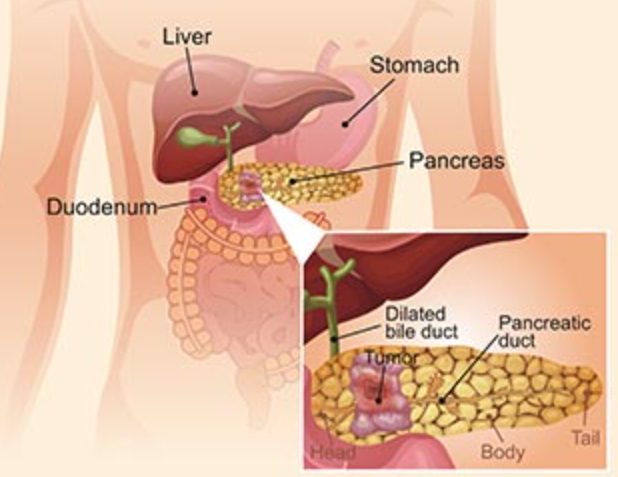
Figure 1. The pancreas structure
Pancreatic cancer occurs when pancreas cells develop abnormal DNA mutations in the pancreas that make them divide and grow a tumor.

Pancreas Structure and Anatomy
The pancreas consists of several anatomical regions, including the head, neck, body, and tail. The pancreatic head is positioned near the duodenum, while its body extends horizontally across the abdomen and its tail approaches the spleen.
The organ contains two major functional components:
-
Exocrine pancreas: Responsible for producing digestive enzymes, including amylase, lipase, and proteases, which are transported through pancreatic ducts into the small intestine.
-
Endocrine pancreas: Composed of the islets of Langerhans, which contain hormone-producing cells involved in glucose metabolism and metabolic regulation.
The pancreatic ductal system plays a particularly important role in pancreatic adenocarcinoma because the most common form of pancreatic cancer originates in the epithelial cells lining these ducts.

How Does Pancreatic Cancer Develop?
Pancreatic cancer develops when pancreatic cells accumulate abnormal DNA mutations that interfere with the normal mechanisms controlling cell growth, proliferation, and programmed cell death.
Under physiological conditions, cells maintain a balance between proliferation, differentiation, and apoptosis. Genetic alterations affecting oncogenes and tumor suppressor genes can disrupt this balance, allowing abnormal cells to survive and multiply.
These molecular alterations may progressively contribute to:
-
Abnormal activation of cellular proliferation pathways.
-
Loss of tumor suppressor activity.
-
Disruption of cell-cycle checkpoints.
-
Alterations in DNA repair mechanisms.
-
Changes in cellular differentiation and apoptosis.
-
Increased tumor growth and progression.
The accumulation of these genetic abnormalities contributes to the development of pancreatic tumors and the molecular heterogeneity observed across pancreatic cancer subtypes.
Types of Pancreatic Tumors
Two major categories of pancreatic growths can occur: cancerous and noncancerous tumors. Among malignant pancreatic tumors, two important types are distinguished according to their cellular origin and biological characteristics.

1. Pancreatic Adenocarcinoma
Pancreatic adenocarcinoma is the most common type of pancreatic cancer. The majority of cases are classified as pancreatic ductal adenocarcinoma (PDAC), which originates in the epithelial cells lining the pancreatic ducts responsible for transporting digestive enzymes.
PDAC is characterized by complex molecular alterations, extensive interactions with the tumor microenvironment, and frequently aggressive biological behavior.
Because the pancreas is located deep within the abdomen, pancreatic ductal adenocarcinoma can be difficult to detect and diagnose during its early stages.
As the tumor develops, patients may experience several symptoms, including:
-
Jaundice resulting from obstruction of the bile duct.
-
Abdominal or back pain.
-
Loss of appetite.
-
Unintended weight loss.
-
Pancreatitis.
-
Digestive disturbances.
2. Pancreatic Neuroendocrine Tumors (NETs)
Pancreatic neuroendocrine tumors are a less common category of pancreatic neoplasms. They originate from neuroendocrine cells within the pancreas, which are involved in hormone production and secretion.
Unlike pancreatic ductal adenocarcinoma, these tumors have distinct biological characteristics and molecular profiles. Some pancreatic NETs produce excessive amounts of hormones, whereas others are nonfunctional and may remain asymptomatic until they become sufficiently large.
Pancreatic neuroendocrine tumors are discussed separately in the article dedicated to Pancreatic Neuroendocrine Tumors.
Molecular Pathology and Genetic Alterations in Pancreatic Cancer

The molecular pathology of pancreatic cancer is strongly associated with genetic alterations affecting oncogenes, tumor suppressor genes, and signaling pathways responsible for regulating cellular proliferation and survival.
Among the most significant molecular abnormalities are activating mutations in KRAS, which are present in more than 90% of pancreatic tumors.
In addition to KRAS activation, inactivating mutations affecting TP53, CDKN2A, and SMAD4 occur in approximately 50–80% of pancreatic cancers.
Other genes, including ARID1A and TGFBR2, are mutated in approximately 10% of tumors [2] [3] [4] [5].
These alterations contribute to the molecular complexity of pancreatic cancer by affecting several cellular processes, including:
-
Cell-cycle regulation and checkpoint control.
-
DNA damage response and genomic stability.
-
Chromatin remodeling and epigenetic regulation.
-
TGF-β signaling and cellular differentiation.
-
Wnt/β-catenin signaling.
-
Regulation of cell growth and tumor suppression.
Understanding these molecular abnormalities is essential for investigating pancreatic cancer biology, identifying potential therapeutic targets, and developing experimental models for cancer research.
Genetic Targets Involved in Pancreatic Cancer
Based on information provided by NCG, a web resource used to analyze the druggability, orthology, and network properties of cancer genes, several molecular targets have been identified in pancreatic cancer research.
The following table presents a selection of genes associated with pancreatic cancer and its molecular pathology.
|
ABCA7 |
ABCC5 |
ABLIM2 |
ACSM1 |
ACVR1B |
ACVR2A |
ADAMTS20 |
ADGRB3 |
|---|---|---|---|---|---|---|---|
|
ADGRD1 |
ADGRL1 |
AKAP11 |
AKAP13 |
ALMS1 |
ARID1A |
ARID2 |
ASL |
|
ATM |
ATP10A |
ATXN1 |
BCLAF1 |
BCORL1 |
BRCA2 |
CDKN2A |
GNAS |
|
KDM6A |
KMT2C |
KRAS |
MACF1 |
MAP2K4 |
PBRM1 |
PREX2 |
RBM10 |
|
RNF43 |
SF3B1 |
SMAD4 |
SMARCA4 |
TGFBR2 |
TP53 |
These genes represent different functional categories and participate in diverse biological processes. Their investigation provides insight into the molecular mechanisms involved in pancreatic tumor development and progression.
Key Molecular Targets in Pancreatic Cancer Research
Several genes play particularly important roles in pancreatic cancer molecular pathology. Their functions involve tumor suppression, cell-cycle regulation, chromatin remodeling, epigenetic control, and intracellular signaling.
CDKN2A: Regulation of Cell-Cycle Progression
CDKN2A (cyclin-dependent kinase inhibitor 2A), also known as p16-INK4a, MTS-1, or CDK4I, is a tumor suppressor gene involved in regulating cell-cycle progression.
Its protein product inhibits cyclin D-CDK4 and cyclin D-CDK6 complexes, which are responsible for initiating the transition from the G1 phase to the S phase of the cell cycle.
By inhibiting these cyclin-dependent kinase complexes, CDKN2A helps prevent uncontrolled cellular proliferation and maintains normal cell-cycle regulation.
CDKN2A is one of the most frequently altered genes in cancer. Its inactivation is particularly significant in pancreatic cancer, where disruption of the RB/p16 tumor-suppressive pathway has been reported in the vast majority of pancreatic carcinomas [6] [7].
Alterations affecting CDKN2A therefore represent an important molecular event in pancreatic tumor development and provide a relevant target for studying cell-cycle dysregulation.
SMAD4: TGF-β Signaling and Tumor Suppression
SMAD4 (SMAD Family Member 4) encodes a tumor suppressor protein that plays an essential role in intracellular signaling mediated by the transforming growth factor-beta (TGF-β) family.
Following activation of TGF-β family receptors, SMAD2 and SMAD3 become phosphorylated and form a complex with SMAD4. This heterotrimeric complex subsequently translocates into the nucleus, where it regulates the transcription of target genes involved in cellular growth, differentiation, and proliferation.
Through these mechanisms, SMAD4 contributes to the regulation of cell growth and tumor-suppressive responses [8].
In pancreatic ductal adenocarcinoma, four major driver genes have been identified as representative cancer-related genes:
-
KRAS
-
TP53
-
SMAD4
-
CDKN2A
Mutations in SMAD4 occur in approximately 50% of pancreatic cancers and frequently result in loss of normal protein function.
The disruption of SMAD4-mediated signaling is therefore an important molecular characteristic of pancreatic ductal adenocarcinoma. Investigating SMAD4 alterations can help researchers better understand the relationship between TGF-β signaling, tumor suppression, and pancreatic cancer progression [9].
ARID1A: Chromatin Remodeling and Epigenetic Regulation
ARID1A (AT-rich interactive domain-containing protein 1A) is an important component of the SWI/SNF chromatin-remodeling complex.
The SWI/SNF complex is a multi-subunit protein complex responsible for regulating chromatin organization through ATP-dependent mechanisms. It modifies chromatin structure by shifting, inserting, or evicting nucleosomes, thereby influencing DNA accessibility and gene transcription.
ARID1A plays an important role in maintaining normal chromatin architecture and regulating gene expression.
In pancreatic ductal adenocarcinoma, ARID1A is frequently investigated because of its association with alterations in chromatin remodeling and tumor-suppressive mechanisms.
Emerging research has demonstrated that ARID1A can suppress pancreatic neoplasia in a compartment-specific manner. In pancreatic ductal cells, this process appears to be associated with MYC-facilitated protein synthesis [10].
These findings highlight the importance of epigenetic regulation and chromatin-remodeling mechanisms in pancreatic cancer development.
KMT2C: Histone Modification and Epigenetic Regulation
KMT2C (Lysine N-methyltransferase 2C), also known as myeloid/lymphoid or mixed-lineage leukemia protein 3 (MLL3), belongs to the KMT2 family of histone lysine methyltransferases.
This family includes KMT2A, KMT2B, KMT2C, KMT2D, KMT2E, KMT2F, KMT2G, and KMT2H [11].
Among these proteins, KMT2C and KMT2D function as histone H3 lysine 4 (H3K4) methyltransferases within the COMPASS-associated complex. They contribute to epigenetic regulation by modifying histones and influencing transcriptional activity [12].
Several studies have identified missense mutations affecting KMT2C and KMT2D in patients with pancreatic cancer.
Furthermore, nonsense and missense mutations in KMT2C/D have been associated with better prognosis in certain pancreatic cancer patient cohorts, as reported by Sausen et al. [13].
These findings suggest that alterations in histone-modifying enzymes may influence pancreatic cancer biology and clinical outcomes, making KMT2C an interesting target for epigenetic research.
RNF43: Regulation of Wnt/β-Catenin Signaling

RNF43 (Ring Finger Protein 43) encodes a transmembrane E3 ubiquitin ligase involved in regulating the Wnt/β-catenin signaling pathway.
Under normal physiological conditions, RNF43 contributes to the negative regulation of Wnt signaling by promoting ubiquitination of Frizzled receptors, which facilitates their removal from the cell surface and reduces Wnt receptor availability.
The Wnt/β-catenin pathway is involved in several essential biological processes, including cell proliferation, differentiation, and tissue homeostasis.
Mutations affecting RNF43 can disrupt this regulatory mechanism and contribute to abnormal Wnt signaling activity.
RNF43 mutations have been identified in several tumor types, including cystic pancreatic tumors. These alterations are particularly relevant to research involving pancreatic cystic neoplasms and molecular mechanisms controlling Wnt pathway activity [14].
Pancreatic Adenocarcinoma Cell Culture and Experimental Research
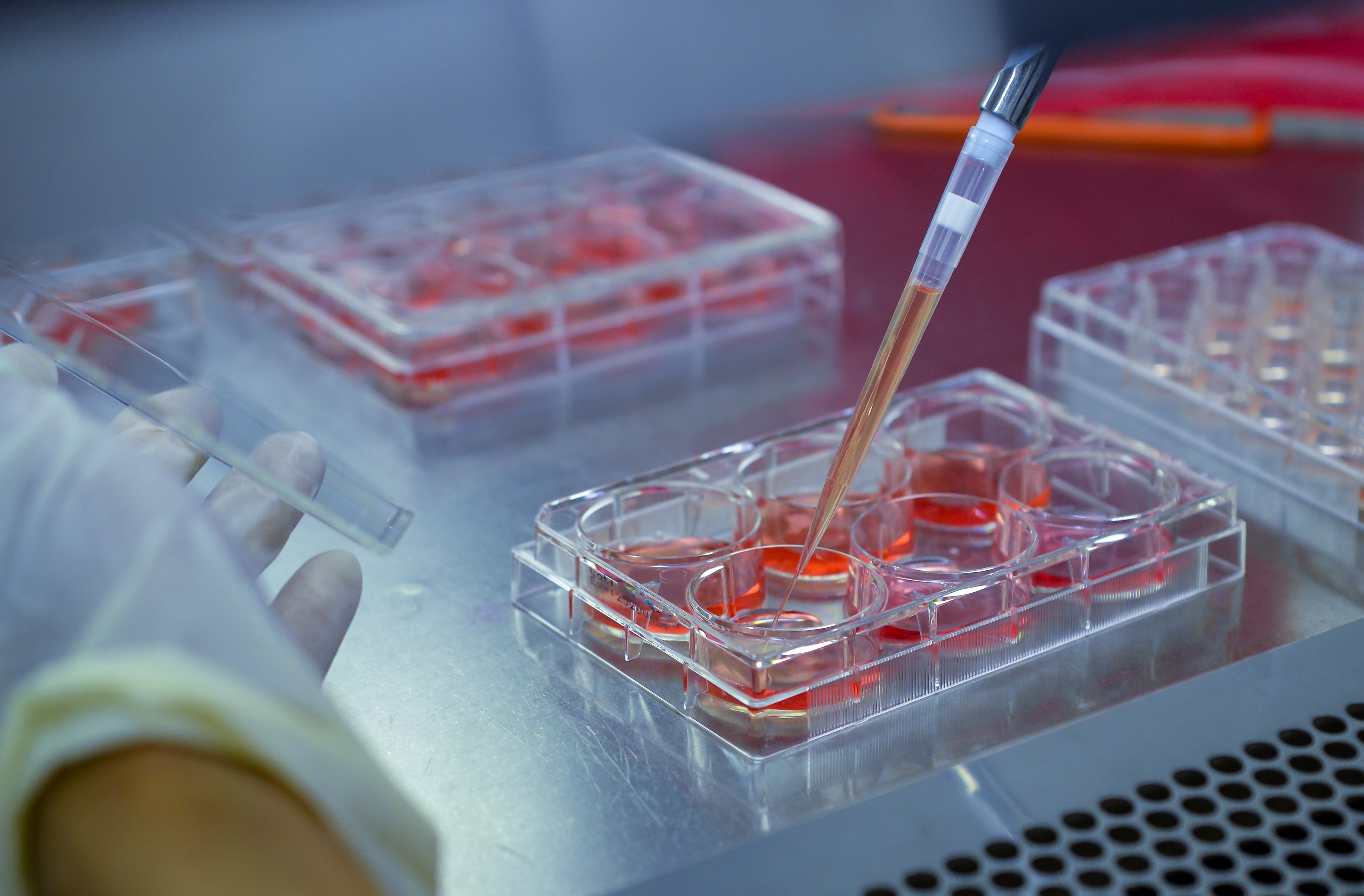
Pancreatic adenocarcinoma cell culture models are widely used in laboratory research to investigate the molecular mechanisms underlying pancreatic tumor development, cellular proliferation, and responses to experimental treatments.
These models allow researchers to study the biological consequences of genetic alterations and evaluate the activity of molecular pathways associated with pancreatic cancer.
In vitro pancreatic cancer research can focus on several experimental approaches:
-
Cell proliferation assays: Evaluation of tumor cell growth and proliferation under different experimental conditions.
-
Cell viability assays: Assessment of cellular responses to experimental compounds and treatment conditions.
-
Apoptosis analysis: Investigation of programmed cell death and the molecular mechanisms involved.
-
Gene expression analysis: Examination of changes in the expression of cancer-associated genes, including KRAS, TP53, CDKN2A, and SMAD4.
-
Signaling pathway analysis: Investigation of molecular pathways such as MAPK, PI3K/AKT, TGF-β, and Wnt/β-catenin.
-
Drug response studies: Evaluation of cellular responses to experimental compounds and potential therapeutic candidates.
Combining pancreatic adenocarcinoma cell culture models with molecular biology techniques provides valuable experimental approaches for investigating cancer-associated genetic alterations and cellular signaling mechanisms.
Molecular Research and Therapeutic Target Investigation
The identification of genetic alterations associated with pancreatic cancer has expanded research into the molecular mechanisms responsible for tumor initiation and progression.
KRAS, TP53, CDKN2A, and SMAD4 remain particularly important targets because of their involvement in major cellular regulatory pathways.
Other genes, including ARID1A, KMT2C, TGFBR2, and RNF43, provide additional opportunities to investigate epigenetic regulation, chromatin remodeling, and intracellular signaling.
Studying these molecular targets can help researchers:
-
Characterize genetic alterations associated with pancreatic cancer.
-
Investigate the molecular mechanisms responsible for tumor development.
-
Understand the interaction between oncogenic signaling pathways.
-
Identify potential biomarkers for experimental research.
-
Evaluate molecular responses to candidate compounds.
-
Develop and characterize preclinical pancreatic cancer models.
The integration of genetic profiling, cell culture experiments, and molecular biology techniques is essential for advancing our understanding of pancreatic cancer.
References
[1] Alexandra Moore and Timothy Donahue. Pancreatic Cancer [J]. JAMA. 2019, 322 (14): 1426.
[2] Wang, L. et al. Whole-exome sequencing of human pancreatic cancers and characterization of genomic instability caused by MLH1 haploinsufficiency and complete deficiency [J]. Genome Res. 2012, 22, 208–219.
[3] Waddell, N. et al. Whole genomes redefine the mutational landscape of pancreatic cancer [J]. Nature. 2015, 518, 495–501.
[4] Bailey, P. et al. Genomic analyses identify molecular subtypes of pancreatic cancer [J]. Nature. 2016, 531, 47–52.
[5] Jorg Kleeff, Murray Korc, Minoti Apte et al. Pancreatic cancer [J]. Nat Rev Dis Primers. 2016, 21 (2):16022.
[6] Schutte, M.; Hruban, R.H.; Geradts, J. et al. Abrogation of the RB/p16 tumor-suppressive pathway in virtually all pancreatic carcinomas [J]. Cancer Res. 1997, 57, 3126–3130.
[7] Jonas Cicenas, Kotryna Kvederaviciute, Ingrida Meskinyte et al. KRAS, TP53, CDKN2A, SMAD4, BRCA1, and BRCA2 Mutations in Pancreatic Cancer [J]. Cancers. 2017, 9 (12): 42–.
[8] Cao, D.; Ashfaq, R.; Goggins, M.G. et al. Differential expression of multiple genes in association with MADH4/DPC4/SMAD4 inactivation in pancreatic cancer [J]. Int. J. Clin. Exp. Pathol. 2008, 1, 510–517.
[9] Takahiro Yokose, Minoru Kitago, Sachiko Matsuda et al. Combination of KRAS and SMAD4 mutations in formalin-fixed paraffin-embedded tissues as a biomarker for pancreatic cancer [J]. Cancer Sci. 2020, 111(6):2174-2182.
[10] Sam C Wang, Ibrahim Nassour, Shu Xiao et al. SWI/SNF component ARID1A restrains pancreatic neoplasia formation [J]. Gut. 2019, 68:1259-1270.
[11] Allis CD, Berger SL, Cote J et al. New nomenclature for chromatin-modifying enzymes [J]. Cell. 2007, 131:633–6.
[12] Rokutan, H.; Hosoda, F.; Hama, N. et al. Comprehensive mutation profiling of mucinous gastric carcinoma [J]. J. Pathol. 2016, 240, 137–148.
[13] Sausen, M.; Phallen, J.; Adleff, V. et al. Clinical implications of genomic alterations in the tumour and circulation of pancreatic cancer patients [J]. Nat. Commun. 2015, 6, 7686.
[14] Xiao Yan Chang, Yan Wu, Ying Jiang et al. RNF43 Mutations in IPMN Cases: A Potential Prognostic Factor [J]. Gastroenterology Research and Practice. 2020, 1457452.
Recent Posts
-

Cusabio custom services
Cusabio offers custom services through Gentaur in the field of life sciences, specifically in the pr …3rd Feb 2024 -
Pancreatic Cancer
Pancreatic Cancer: Molecular Pathology, Genetic Mutations and Research Targets Understanding Pancrea …1st Nov 2021